March 30, 2020
Dar es Salaam: 1985 and Today
On the Anniversary of ITDP’s 35th Year, Transport Matters will be publishing a series of articles about cities that ITDP has worked in, comparing them from 1985 and today. The article in full can be found in the Sustainable Transport Magazine. Read previous articles about Buenos Aires here, Chennai here, and Rio de Janeiro here.
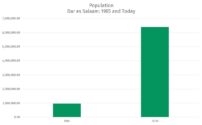
35 years ago, Dar es Salaam was experiencing a surge of informal public transit operators. The transport authority acknowledged it was unable to meet demand with its limited bus system, and legalized the now ubiquitous daladala minibuses. Today, this is still how most Dar es Salaam residents travel: packed into shared minibus taxis that jostle for space on the city’s car-dominated streets, or on the back of the Boda boda motorbike taxis that weave through traffic and navigate narrow side alleys. In the past 20 years the population has boomed, from less than one million to more than six million and today Dar es Salaam has moved to the forefront of African cities, it is now the third fastest growing city on the continent.
Dar es Salaam Before
Click below photos to enlarge
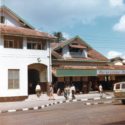
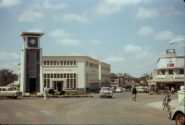
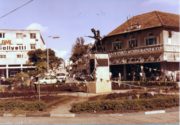
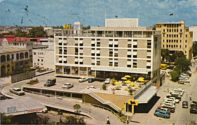
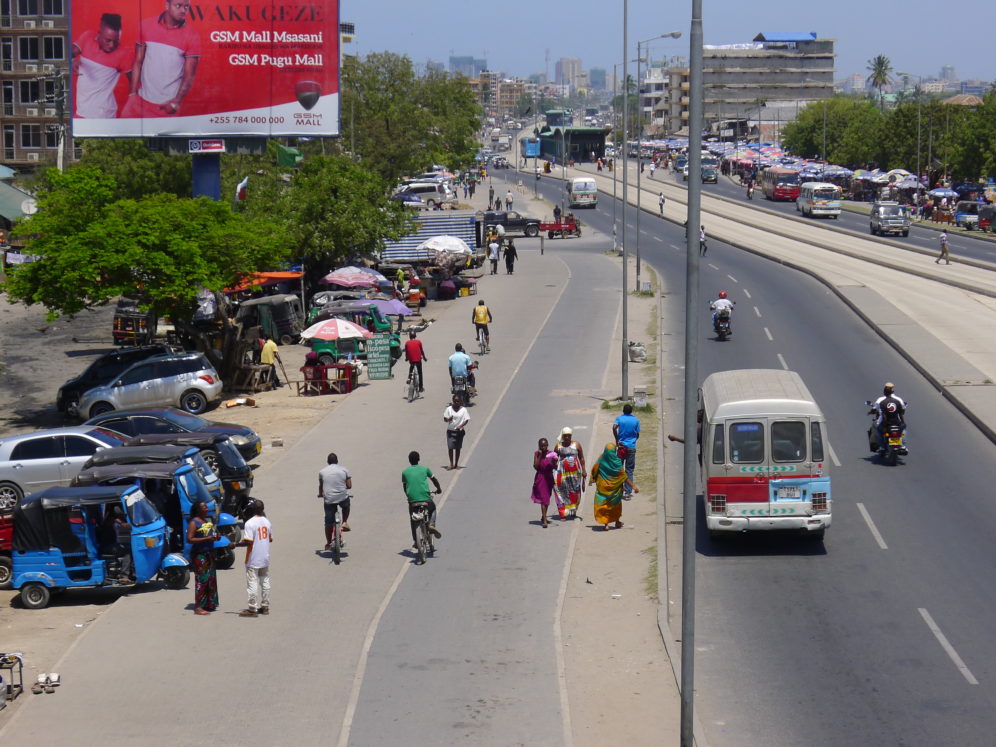
Tanzania’s largest city, Dar es Salaam is a major transport hub for the East Africa region. The city’s port handles much of the region’s international trade. In 2018, Dar es Salaam won the Sustainable Transport Award for launching the first line of its long planned Bus Rapid Transit (BRT) system, Dar es Salaam Rapid Transit (DART). DART, the first BRT in the region, is an ambitious urban transport project. Located on a main road leading into the city, the BRT reduced travel time for some commuters by over half, reducing 2 hour commutes to 45 minutes in one direction. Right now, DART boasts a fully operational line 1, line 2 under construction, and 4 additional lines planned. DART has won acclaim and attention for Dar es Salaam within the international community, and demonstrates how a BRT can work to many African cities as an alternative to expensive metro systems.
Dar es Salaam Today
Click below photos to enlarge
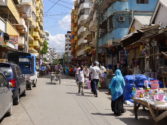
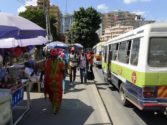
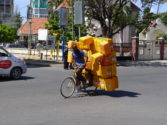
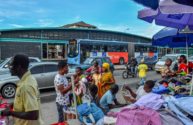
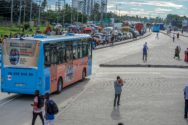
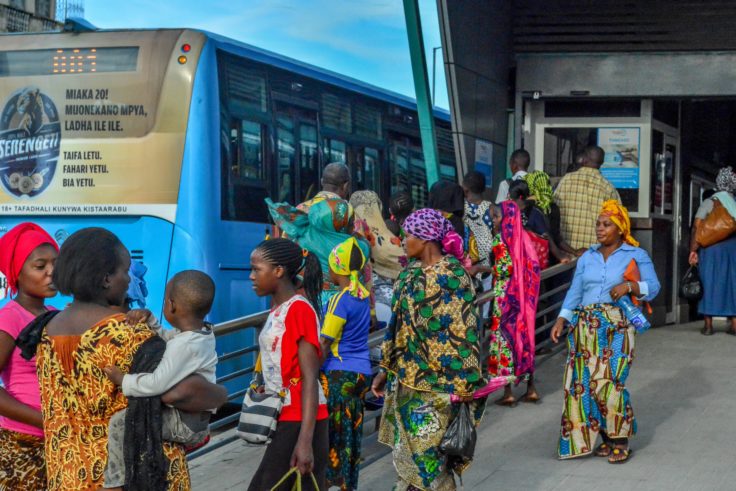
With 21 kilometers completed, DART is already providing a massively-improved transit experience to approximately 172,000 passengers a day. DART is showing what is possible and has already inspired other cities, such as Nairobi and Addis Ababa, to begin work on their own systems.
Dar es Salaam in Numbers
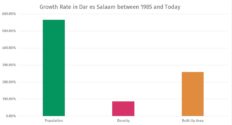
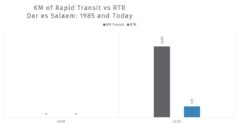
To measure and study cities’ growth objectively, metrics were employed looking at population, density, and transit. In these figures, kilometers of rapid transit are defined as rapid transit that meets the definition of BRT basics in the BRT Standard, in Dar es Salaam kilometers of rapid transit grew from 0 in 1985 to 20.9 in 2018, which was made up entirely of the BRT, DART. While this demonstrates important growth, there is still much more progress to be made. One statistic included in these graphs is the Rapid Transit to Resident Ratio (RTR) which compares the population with the length of rapid transit lines – this number shows how well a population is served by rapid transit. While RTR can now be measured in Dar es Salaam, at 3.27, there is obviously much progress to be made. The most precipitous growth in Dar es Salaam in the past 35 years has been the explosion of population. Dar es Salaam went from home to fewer than 1 million people to home for over six million people and is the second fastest growing city in the world. With such fast population growth, it will be important for Dar es Salaam to avoid tired, and dysfunctional models of growth centered around car usage and instead build for sustainability.